


AND IF THE ROADS COULD TALK
The Volta a Portugal em Bicicleta will take on a new dimension in 2026 with the launch of A Grandíssima, the race’s official Granfondo, which will allow hundreds of amateur cyclists to experience, for one day, the thrill, atmosphere and mystique of the country’s biggest cycling competition.
THE ORIGIN
The story behind the birth of the Volta a Portugal is a mix of romance, newspaper rivalry, and an adventure that would seem downright crazy today.
To understand it, we must go back to 1927. That is where the idea begins to take shape. That is where the road begins to speak.
THE MADNESS OF A NEWSPAPER AND A CLUB
It all began with an idea inspired by the Tour de France. The newspaper Diário de Notícias, driven by journalist Raúl de Oliveira, wanted to create something that would unite the country. Joining this project were the national cycling organizations of the time and Sporting Clube de Portugal.
The goal was not only sporting, it was territorial. In a Portugal where many roads were little more than paths, organizing a major stage race was a way of showing that the country could be crossed, that it could be connected.
THE FIRST "GIANT"
The first attempts to organize major routes emerged. Dozens of cyclists took to the road without a professional structure, without organized teams and without the technical support as we know it today.
Logistics were basic, and the riders themselves carried spare tubular tires across their chests and tools in small bags. The terrain was unpredictable. Long distances, dirt and stone roads, stages that demanded far more than speed. It was cycling in its purest form. Closer to exploration than to competition.
It was on the road that the Volta was born.
1927: THE CHAOS OF CAMPO MAIOR
The Setting: A forgotten border region and roads that were little more than ruts in the earth. They would start here. At a time when the country was not yet connected, and crossing it was more exploration than competition.
There were no reliable maps. In Campo Maior, the peloton got lost. The bicycles sank into the dirt, the wheels gave way on loose stones, and the dust hid the route. António Augusto de Carvalho won by instinct. Unable to follow the road, he chose to discover it. As they passed through the villages, the locals watched with suspicion: men covered in mud, appearing out of nowhere. It was not just sport. It was the unknown.
The country was mapped, but its roads were not yet.
1932: THE COUNTRY CHOOSES SIDES
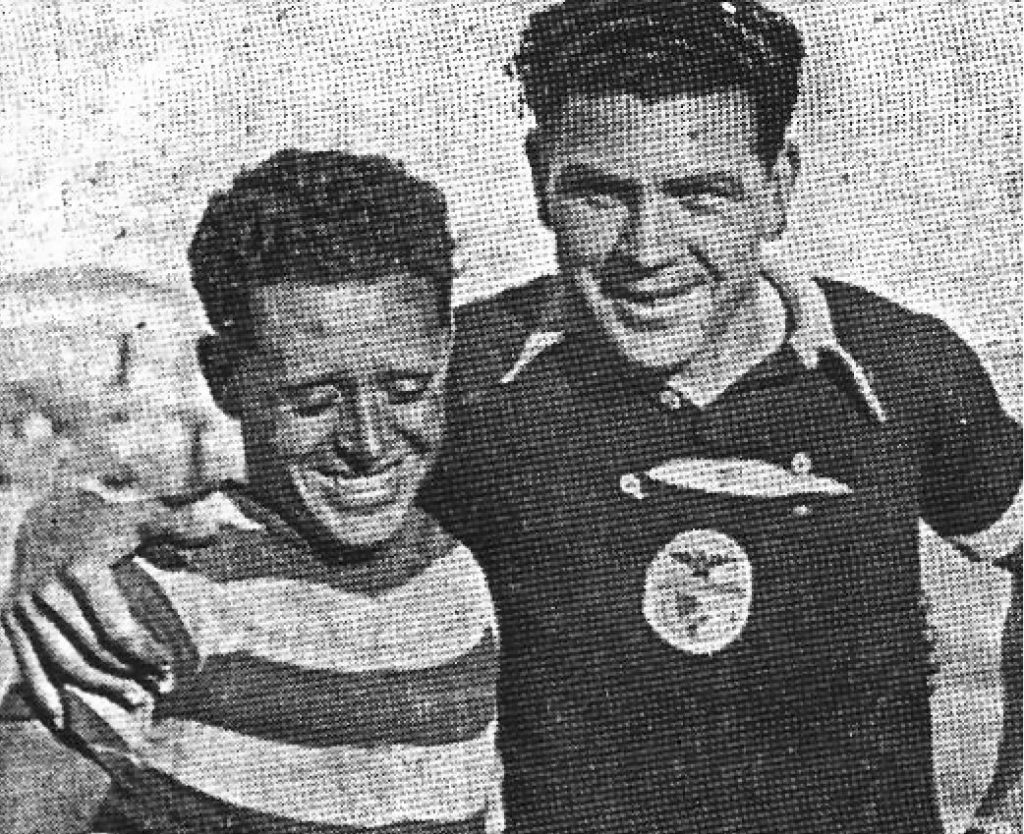
The setting: the straight roads between Lisbon and the North, when the highway still didn’t have two carriageways. The country did.
The duel between José Maria Nicolau and Alfredo Trindade sparked the first great popular rivalry of the Tour. Nicolau was a mass idol, associated with Benfica; Trindade, with Sporting. The road ceased to be just a route and became emotional territory.
The rivalry spread through villages, cafés, newspapers and roadsides. Portugal discovered that a cycling race could divide opinions and, at the same time, bring the entire country together around the same passion.
Years later, Nicolau’s memory would also find its way into literature. Ruy Belo dedicated an elegy to him, in which the cyclist seems to keep riding away, even after death:
“José Maria Nicolau has broken away. Who can catch him now?
Never has he pedalled so hard as he does today.
Surely he will arrive ahead of time.
The stage was decisive, and it is won.”
The road still remembers those days.
When the Tour was not just a race. It was a choice.
1932–1933: THE ROAD CROSSED THE BORDER
The Setting: The humid North, the smell of the sea, and a road that, for the first time, left Portugal behind.
Until then, the Volta took place within a country closed in on itself. The roads connected cities, villages, and mountain ranges, but they always ended at the border.
In 1932, that changed.
In the 14th stage of the third edition of the Volta a Portugal, the peloton set off from Porto towards Vigo. For the first time, the race left Portuguese territory. It was not just an international stage. It was the feeling that the road could continue beyond the known map.
It was 154 kilometres of dust, endurance, and improvisation to Galicia. The caravan moved slowly along difficult roads, passing through towns where the sight of the riders seemed like an impossible event.
When they arrived in Vigo, they found something unexpected. The streets were packed. The authorities were waiting for them. And the crowd welcomed the Portuguese riders as if they were heroes returning from a historic journey.
On that day, the road realized that cycling could do something rare: connect peoples before politics could.
Alfredo Trindade won the stage. Months later, he would also win the Volta itself, thanks to a remarkable performance in the Serra da Estrela. But the road kept another memory of that journey. It kept the moment when the Volta ceased to belong only to Portugal.
The success of the finish in Vigo was so great that the race would return to Galicia the following year.
Because some roads do not end at the border. They continue within people.
1939: THE VOLTA WITHOUT REST
The Setting: Endless roads, constant dust, and a country where cyclists almost stopped being able to tell one day from another.
In 1939, the Volta a Portugal became a test of survival.
There were 30 stages in just 16 days. Riders raced in the morning. They raced again in the afternoon. And the next day, it all started over once more.
Never had the road demanded so much.
The bicycles were heavy. The roads were almost entirely unpaved. And rest was a luxury that practically did not exist.
The riders slept only a few hours, ate poorly, and accumulated kilometres like soldiers on the march. Dust clung to their sweat, their muscles stiffened, and withdrawals began to multiply.
The road remembers the protests, the arguments, and the exhausted cyclists leaning by the roadside, trying to recover their strength before getting back on their bikes.
There, the Volta ceased to be just a race. It became a test of human endurance.
At the end of that impossible marathon, Joaquim Martins de Aguiar, a Benfica rider, endured better than everyone else and claimed the Yellow Jersey.
But the road never forgot the true winner of that edition.
Suffering.
Because there was a year when the Volta offered no rest. And the road seemed to have no end.
1950: THE CALVARY OF MONTEJUNTO
The Setting: The legendary climb that cuts through the mist near the Atlantic.
There was a time when the roads were the people’s only radio. In 1950, Montejunto was a feared monster. The wind blew so fiercely and raised so much dust that cyclists could not see the wheel of the rider in front of them. Many crashed simply because they could not tell where the road ended and the precipice began. The riders had to cover their mouths with handkerchiefs just to breathe. Images from the time show men with faces completely blackened, covered in layers of dirt and sweat, looking like miners who had just emerged from the depths of the earth.
If its bends could speak, they would remember cyclists like Dias dos Santos, climbing with heavy iron chains and without modern gears. The road remembers the smell of camphor oil and the sound of chains rattling over loose stones. The riders stopped at fountains to plunge their heads into icy water, and the road watched them cry from exhaustion before climbing back onto their steel bicycles to face the biting wind of the mountain.
The wind, harsher than the road itself.
ANOS 50 - A ESTRADA ENCONTRA OS SEUS ÍDOLOS
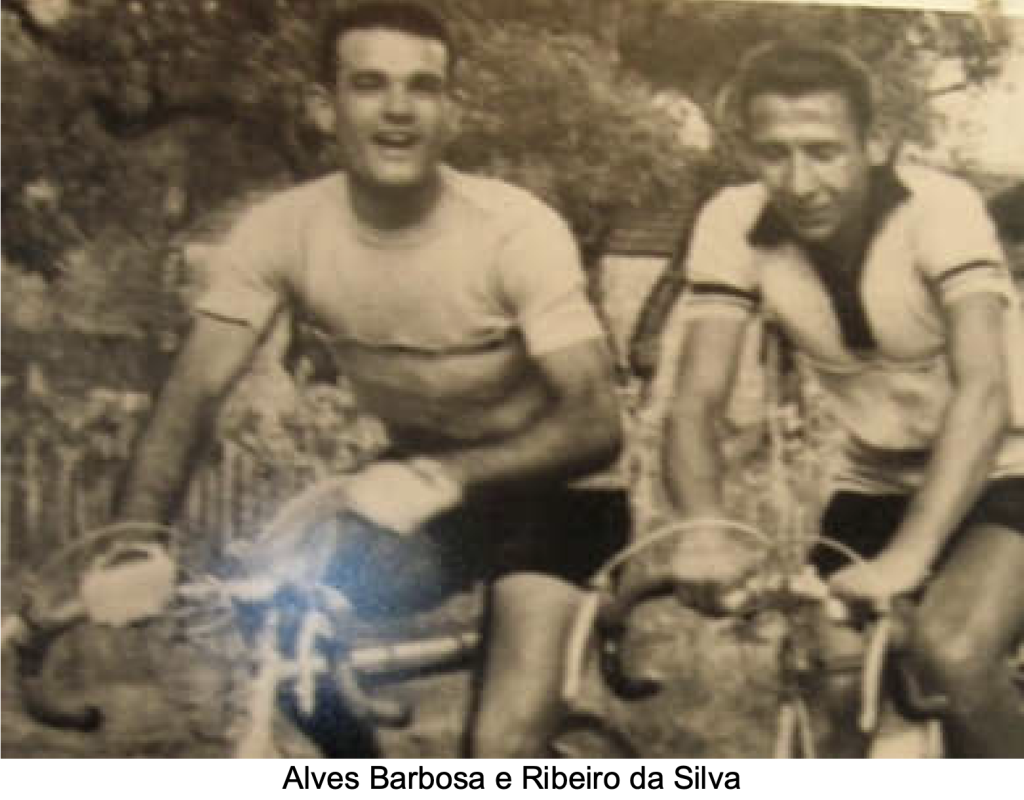
The setting: A country that was beginning to see cyclists as popular heroes.
In the 1950s, the Volta ceased to be merely a test of endurance. It became spectacle, rivalry and collective emotion.
Alves Barbosa was the great face of that transformation. Winner of the Volta in 1951, 1956 and 1958, he became the first great modern idol of the race, a cyclist capable of drawing crowds to the roadside and projecting Portuguese cycling beyond its borders, with appearances in the Tour de France and a stage victory in the Vuelta a España.
But alongside him emerged a figure as brilliant as he was short-lived: José Manuel Ribeiro da Silva. He won the Volta in 1955 and 1957, finished second in 1956 and, during that same period, showed the extent of his talent beyond Portugal, finishing 4th in the 1957 Vuelta a España.
The road saw in them two forms of greatness.
Barbosa, the idol who consolidated the popularity of the Volta.
Ribeiro da Silva, the dazzling talent whose destiny was cut short far too soon.
The road gave them glory.
Time gave them legend.
1957–1960: THE FIRST IMAGES
The Setting: A country beginning to see the race, even though it still followed it live on the radio.
For decades, the Volta a Portugal was an event experienced from afar. Radio was the true lifeline of the race, the voice that kept the country connected to the road in real time, describing attacks, crashes, and breakaways.
Television was still taking its first steps. In 1957, just a few months after the start of regular broadcasts by RTP, the Volta appeared on television for the first time, but not as we know it today. There was no live television coverage. What reached the public were summaries and reports, broadcast at the end of the day or included in news bulletins. Images that condensed hours of racing into just a few minutes.
Behind those images was an almost artisanal process. Camera operators filmed on celluloid. The footage was physically transported to Lisbon, often by car or train, with great urgency, where it was developed, edited, and prepared in time for broadcast. Television was beginning to show the Volta. But it was still radio that brought it to life in real time. It was through the voice that the country raced and imagined the race. And every voice turned dust into epic.
When the road was black and white.
1962: THE SPRINTER WHO SURVIVED THE MOUNTAINS
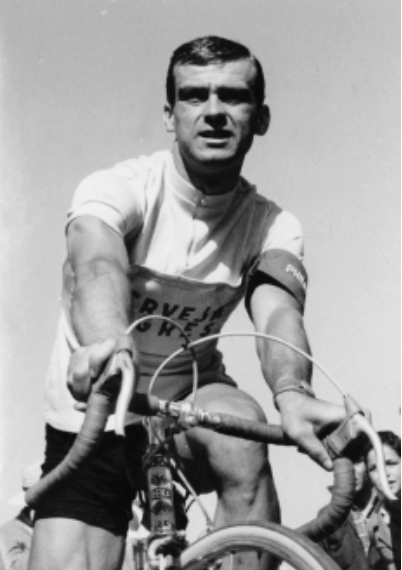
The Setting: A country in turmoil, roads scorched by the heat, and a Volta that seemed designed to break men.
The 1962 edition was one of the toughest ever. Never before had the road brought together so many riders. One hundred and twenty-nine cyclists set out on that adventure. In the end, only thirty-six managed to reach the finish.
The rest were left behind along the way.
The heat crushed the peloton. The stages seemed endless. Withdrawals mounted day after day, as if the road itself were choosing who was allowed to continue.
And in the middle of that chaos, José Pacheco emerged.
No one expected a pure sprinter to survive that Volta. Much less to dominate it.
But Pacheco did not race like the others. He raced as if the road had never found a way to stop him.
Wearing the colours of FC Porto, he won eight stages and endured where, in theory, he should not have endured: through the relentless hardship of the mountains, fatigue, and heat.
The road saw men built for climbing disappear. And it saw a sprinter outlast them all.
But the memory of that Volta remained tied to another idea: sometimes, the road chooses unlikely winners.
José Pacheco did not win because he was the strongest in the mountains. He won because, in that summer of 1962, no one managed to survive better than he did.
1967: THE YEAR THE VOLTA CEASED TO BE ONLY PORTUGUESE
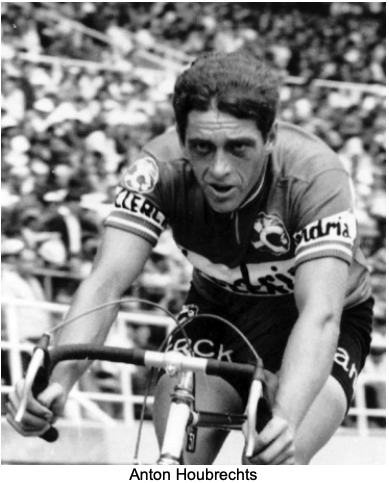
The Setting: A country accustomed to dominating its own roads… until someone from abroad arrived to conquer them.
For decades, the Volta a Portugal belonged to Portuguese riders. The roads, the heat, the demanding stages, and the unpredictability of the race seemed to favour those who knew the country like the back of their hand.
But in 1967, the road changed the rules.
For the first time, a foreign rider won the Volta a Portugal.
His name was Antoine Houbrechts. He came from Belgium. And he rode for the powerful Flandria team.
His victory was not just a sporting result. It was the moment when the Volta realized it was beginning to enter a new dimension.
Until then, the Portuguese riders had largely raced among themselves, in a contest shaped by internal rivalries, historic clubs, and national heroes. But Houbrechts brought a different school of cycling: more pace, more organization, and greater international experience.
The road felt the difference.
The stages began to be raced in a different way. The peloton started to realize that Portuguese cycling was no longer isolated from the rest of Europe.
And perhaps that was what defined that edition the most.
Not the Portuguese defeat. But the fact that the Volta had ceased to be merely a national race and had begun to gain an international dimension.
The road remained Portuguese.
But it was already beginning to speak other languages.
Joaquim Andrade
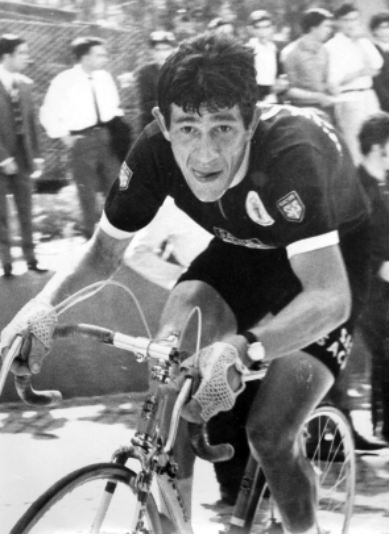
but helped keep it alive.
1970: THE RISE OF JOAQUIM AGOSTINHO
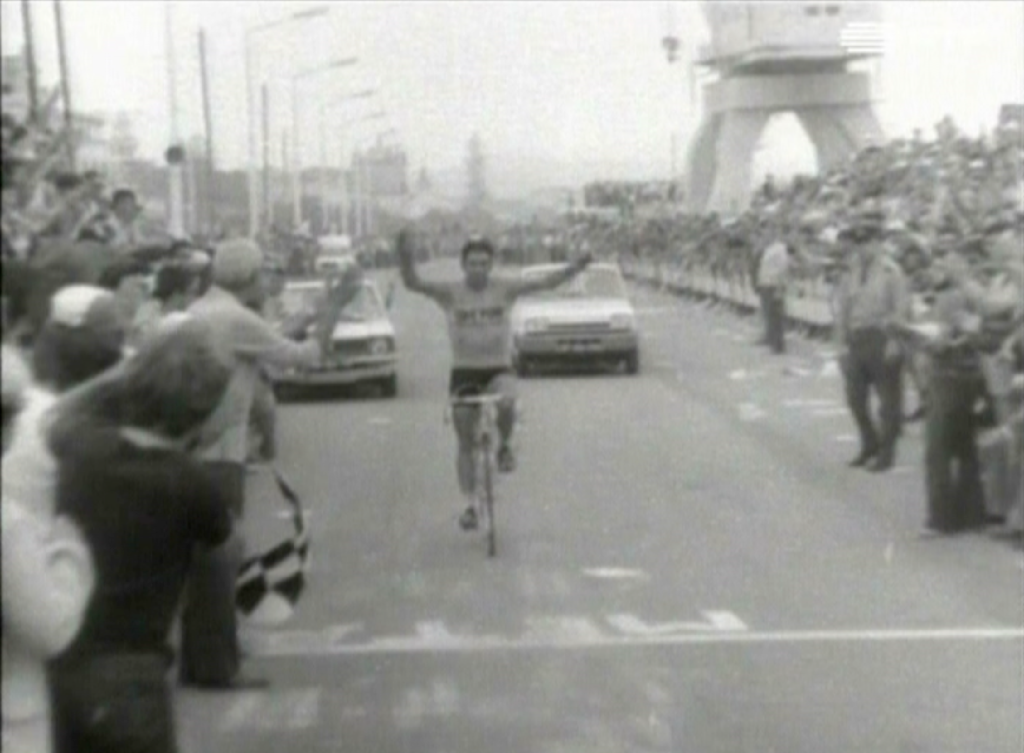
The Setting: A country in transition, a road beginning to produce international heroes.
Agostinho did not ride the road, he overpowered it. Emerging from nowhere at the age of 25, he traded the forests of the war in Africa for the asphalt, transforming himself into a force of nature that not even the gods of the Tour de France could tame. With broad shoulders and superhuman endurance, he conquered Alpe d’Huez and the heart of Portugal. He was the hero who never needed tactics; his strategy was brute strength and the silent endurance of suffering.
Joaquim Agostinho wins the Volta (1970, 1971, 1972). The Portuguese road recognizes something different in him. It is not just talent. It is the ability to endure extreme effort. His way of racing changes the perception of cycling in Portugal. He crashes many times.
He always carries on.
“Agostinho did not race against others.
He raced against the limits of the road.”
1978: NOSSA SENHORA DA GRAÇA
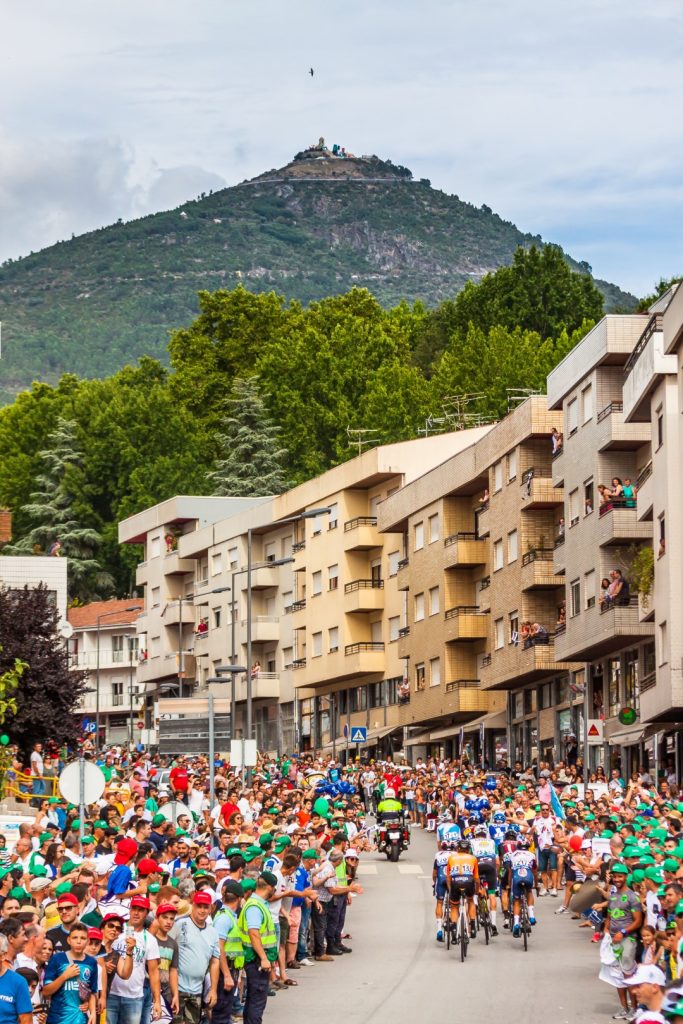
The Setting: Monte Farinha, a climb that became sacred.
The road did not yet know it, but that year one of the most important chapters in the history of the Volta was beginning to be written. In 1978, the Volta a Portugal climbed to Senhora da Graça, at the summit of Monte Farinha, for the first time. Until then, the race already knew hardship, but it had not yet found a place that defined it.
The climb was not the longest in Europe.
Nor the highest.
But the road had something different.
There, riders did not attack only the race.
They attacked suffering itself.
Each bend seemed to separate ordinary men from those capable of enduring the mountain. The silence grew heavy, broken only by the riders’ breathing and the shouts echoing up the mountainside.
Senhora da Graça ceased to be just a mountain. It became a judgment.
The road understood early on that there were climbs… and there were sacred places.
1980: LOULÉ AND THE HEAT OF THE SOUTH
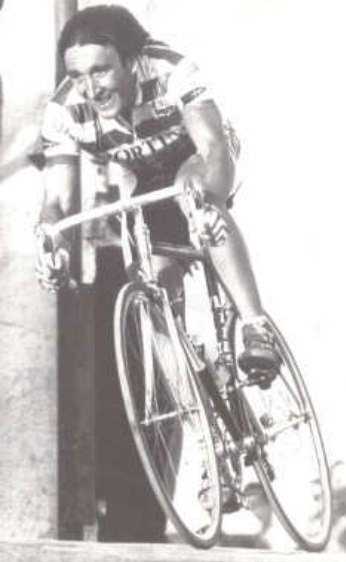
The Setting: The Algarve at the height of summer.
In the 1980s, the Volta gained a new adversary: the heat. High temperatures, dry winds, and long stages made the effort even more demanding. As the peloton, led by Marco Chagas, approached Loulé, the temperature was so high that the asphalt on the road began to change from a solid to a liquid state. It was said that the heat was so unbearable that the air they breathed burned their lungs. Chagas dominated this period (4 Volta victories: 1982, 1983, 1985, and 1986). He was an intelligent, strategic cyclist, capable of reading the race.
The Volta ceased to be only about strength. It became about reading the road.
1982: THE RTP REVOLUTION
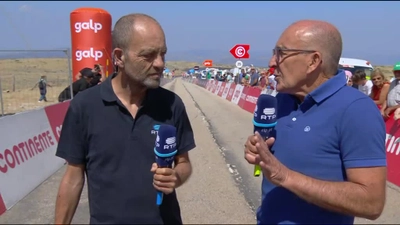
The Setting: A country that goes from imagining the race… to watching it live.
For decades, the Volta a Portugal was experienced more than it was seen. Television existed, but the race reached the public through highlights and summaries. It was radio that truly connected the country to the road. Through it, people followed breakaways, crashes, and attacks in a narrative built by voice and imagination.
In 1982, everything changed. RTP began live broadcasts of the Volta, transforming the way the country followed the race. For the first time, the public no longer had to imagine — they could see. The impact was immediate. The road entered people’s homes. Moments were no longer simply described; they were experienced in real time. The Volta ceased to be only a collective story. It became a national spectacle, but its essence remained the same. Because even with cameras and live coverage, the race continued to be decided in the same place as always: on the road.
The road was first heard, then seen. Always felt.
1984: THE SILENCE OF QUARTEIRA
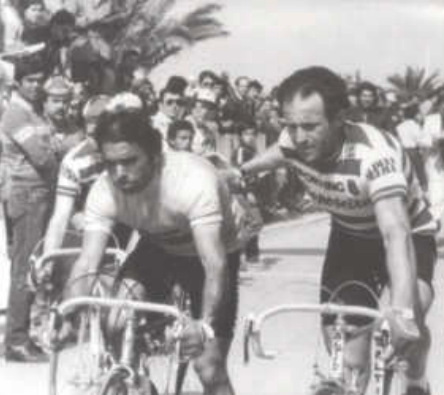
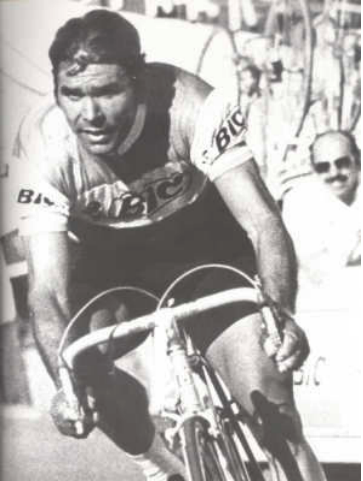
The Setting: A flat road, with no warning, where everything changes.
During the Volta ao Algarve, Joaquim Agostinho suffered a crash after colliding with a dog. He got back up. He finished the stage. Days later, he died as a result of the injuries sustained in the accident. This moment left a profound mark on Portuguese cycling.
The road has carried a different kind of silence ever since.
Some roads never forget.
1986: THE LAST LION OF THE VOLTA
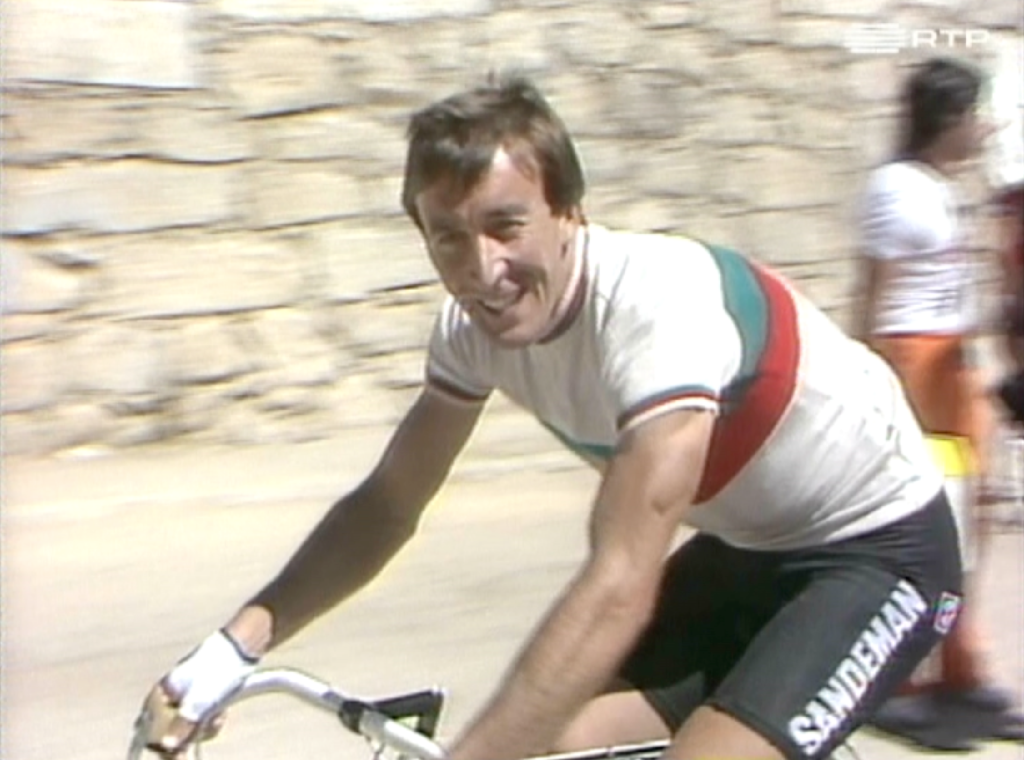
The Setting: A country captivated by the Volta, a time trial by the sea, and a yellow jersey decided by seconds.
In 1986, Marco Chagas definitively secured his place in the history of the Volta a Portugal. He had already won. He was already one of the great names in Portuguese cycling. But that summer, the road had something different in store for him. The Volta seemed to be slipping through his fingers.
The Englishman Cayn Theakston was leading the race until he crashed and was forced to abandon. The road then changed hands once again. Benedito Ferreira took over the lead, and everything suggested that he would hold on until the finish. But the Volta was never a race of predictions. It was always a race of survival.
In the penultimate stage, a 28-kilometre time trial at Praia da Amorosa, Marco Chagas delivered one of the most remarkable performances in the history of the race. He had more than three minutes to make up. It seemed impossible. But the road along the Atlantic coast became his territory.
Pedal stroke after pedal stroke, he chipped away at the gap. The wind, the effort, and the clock slowly began to turn the Volta upside down. When he crossed the finish line, the race had changed forever. Marco Chagas claimed his fourth Volta a Portugal, surpassing names such as Joaquim Agostinho and Alves Barbosa and becoming the most successful winner in the history of the race up to that point.
But the road kept another memory of that day.
That it was also the last victory by a rider representing Sporting Clube de Portugal in the Volta.
The last lion in yellow.
And perhaps that is why the story remained suspended in time, as if the road were still waiting for another one.
90s: THE NORTH DECIDES
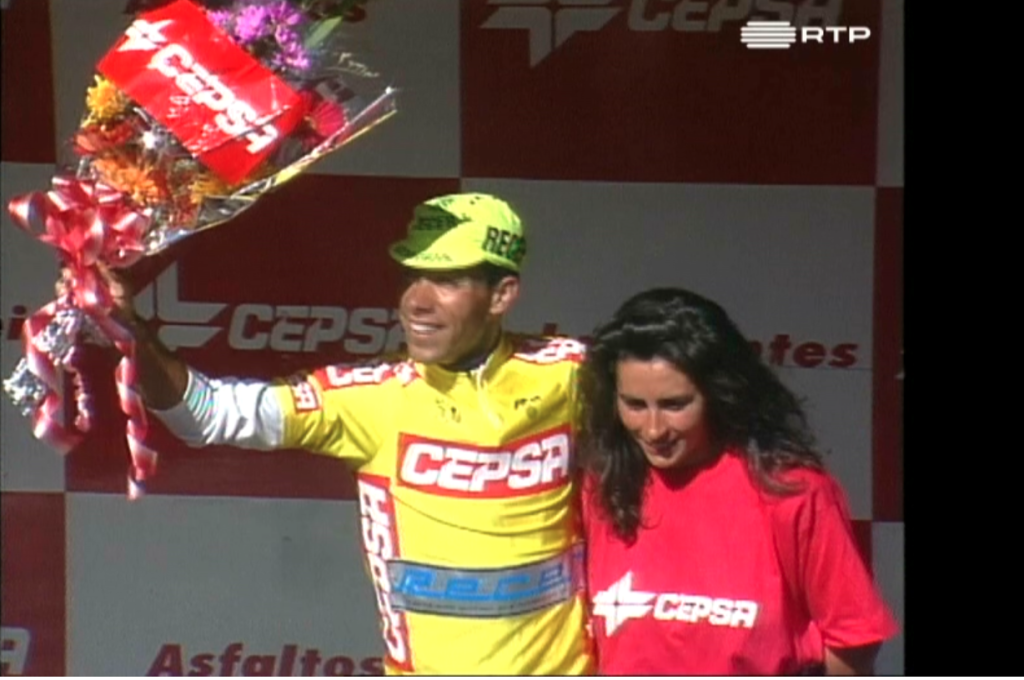
The Setting: More technical roads, tougher roads, more decisive roads.
Cycling evolves. Teams become better organised. Strategy grows in importance. Race control ceases to be occasional and becomes methodical, and the Tour follows this transformation. The North, with its demanding roads and uneven terrain, becomes decisive. It is no longer strength alone that separates the riders, but the ability to read the right moment. New names emerge, new talents: Orlando Rodrigues, Manuel Zeferino and Américo Silva. Among them is Joaquim Gomes. Without the immediate impact of the great dominators, he builds his career differently: through consistency, a constant presence among the best, and the ability to endure in the mountains when others fade.
Whoever understands the road controls the race.
Whoever endures the road eventually conquers it.
LATE 90s: REDEMPTION AND PROJECTION
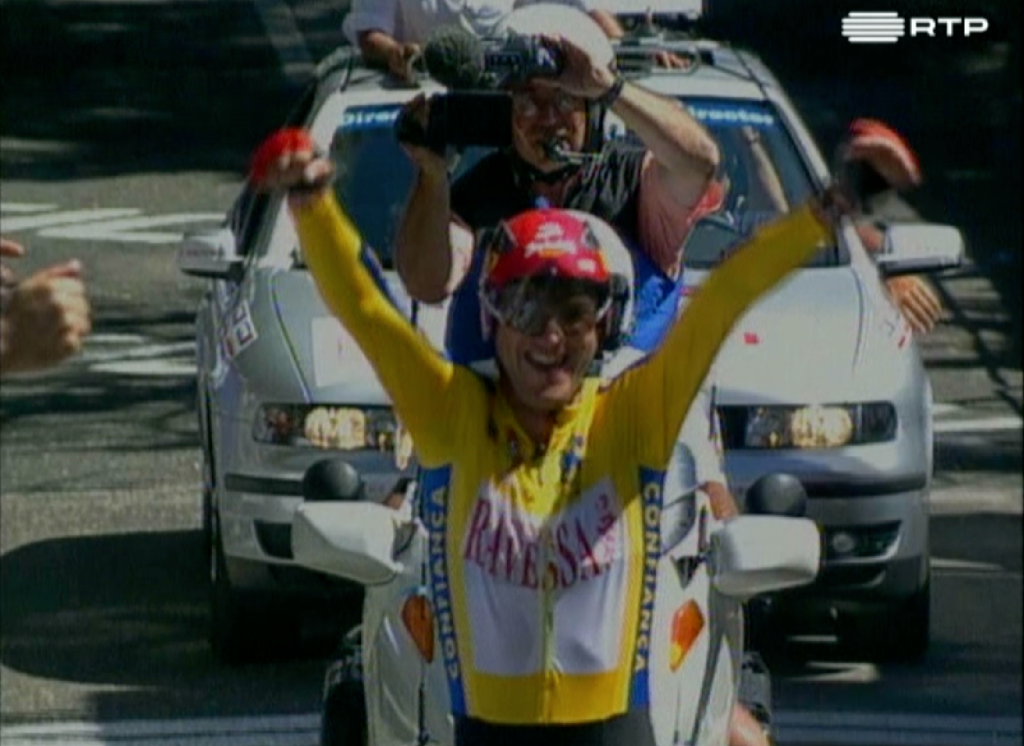
The Setting: A cycling world in transformation, where tradition returns and the competitive level rises.
The turn of the millennium brought a new dynamic to the Volta a Portugal. Historic teams such as Benfica returned to the road, while the peloton became more structured and demanding. In 2000, Vítor Gamito finally found victory. After several years among the best, he built his triumph through consistency, confirming his place among the race’s most important names. At the same time, José Azevedo was making his mark. One of the Portuguese cyclists with the greatest international projection, he would go on to excel at the highest level, finishing 5th in the 2004 Tour de France. In the Volta, however, his relationship with Serra da Estrela was never a good one. Paradoxically, the rider who would later establish himself in the great mountain stages of the Tour had his own personal ordeal on the most iconic climb in his own country.
The best climber does not always win on every mountain.
START OF THE MILLENNIUM: THE "GRANDÍSSIMA" AND OPENING TO THE OUTSIDE WORLD
The Setting: A demanding Volta, shaped by heat, hardship, and an increasingly international peloton.
At the start of the millennium, the Volta a Portugal gained a particular reputation within the international peloton. Foreign riders, accustomed to the Grand Tours, found in Portugal a surprisingly demanding race: long stages, intense heat, and relentless accumulated fatigue. It was in this context that a term began to take hold and become associated with the race: The Grandíssima.
At the same time, international participation increased and raised the competitive level. The Volta ceased to be merely a national race and became a challenge recognized beyond Portugal.
On the sporting side, the Maia team stood out, with riders such as Fabian Jeker and Claus Møller, supported by an organized structure and the ability to control the race. But not everything could be controlled. At the finishes, Cândido Barbosa emerged, capable of defying all logic. His speed turned predictable finales into moments of uncertainty, accumulating so many victories that he would become one of the most iconic figures in the history of the race.
Between collective control, the arrival of new riders, and individual brilliance, the Volta entered a new era.
Small in size.
Immense in toughness.
2007–2015: THE GALICIAN ARMADA
The Setting: An increasingly international Volta, where the North and the mountains once again become decisive.
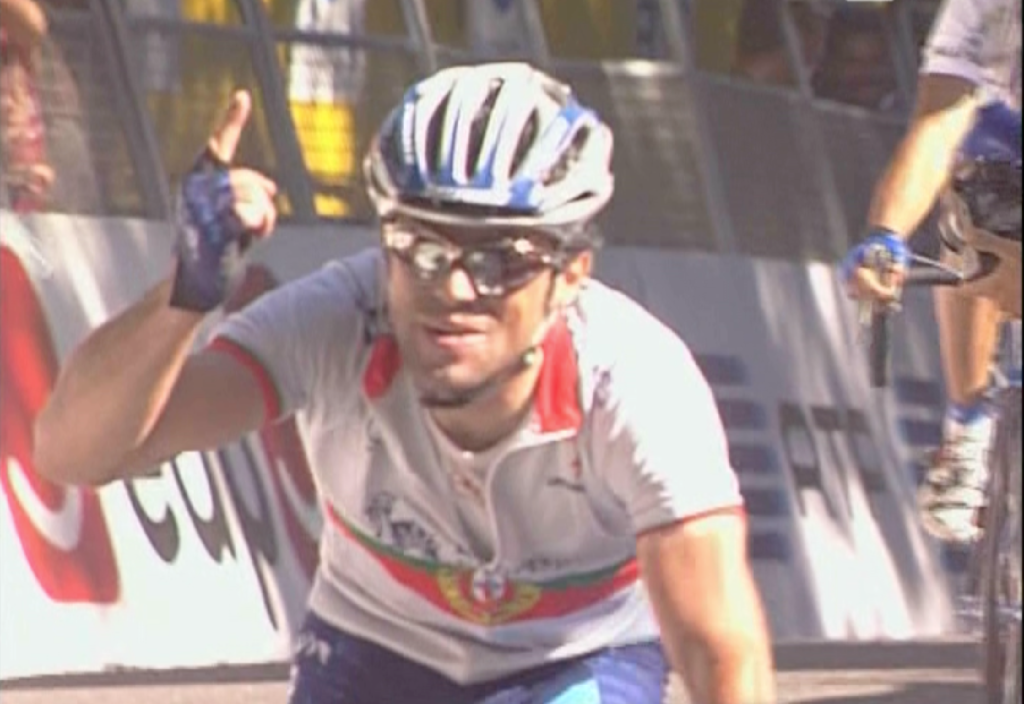
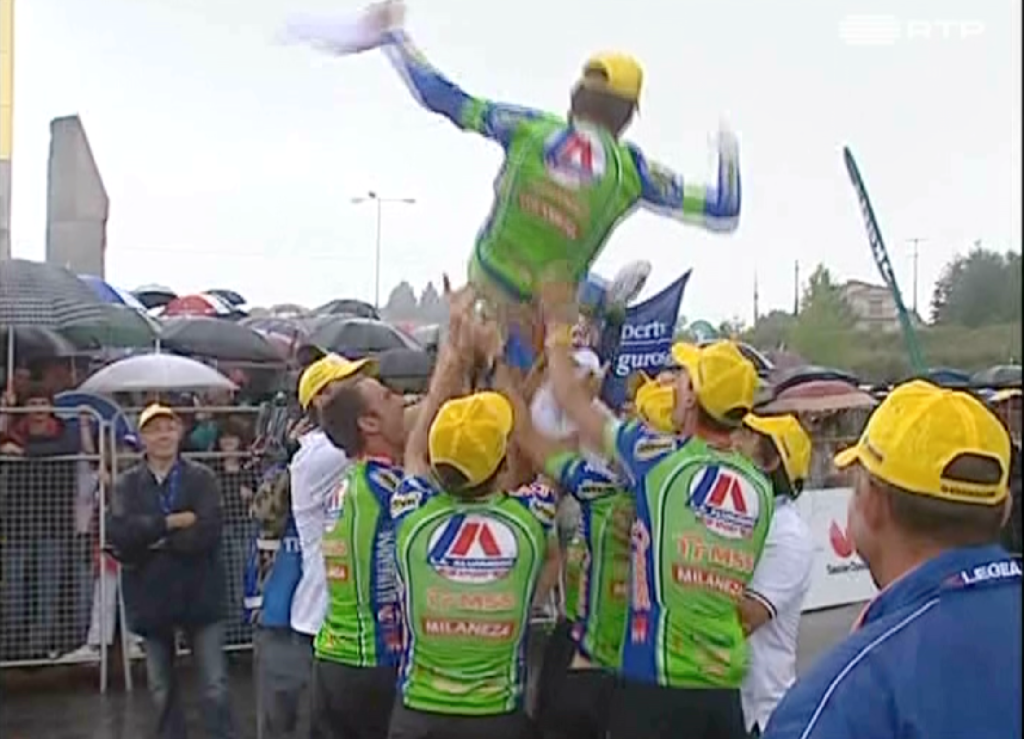
Between the end of the 2000s and the beginning of the following decade, the Volta a Portugal entered a period marked by clear dominance from the other side of the border. The so-called Galician Armada imposed itself on the race. Names such as Gustavo Veloso and Alejandro Marque established themselves with consistency, but it was above all David Blanco who defined an era.
With five overall victories (2006, 2008, 2009, 2010, and 2012), Blanco became the most successful rider in the history of the Volta, surpassing the record previously held by Marco Chagas. He did not dominate through explosive attacks, but through race intelligence, consistency, and an ability to choose the right moment. At a time when the Volta was becoming increasingly strategic, his style of racing perfectly matched the nature of the event.
The road recognized something rare in him: someone who understood it.
At the same time, this period confirmed a reality of the new millennium: the Volta no longer belonged only to Portuguese riders. It had become an open race, where international talent could find the terrain to prevail.
The road has no nationality.
It belongs to those who understand it best.
2014: THE RETURN TO DIRT ROADS
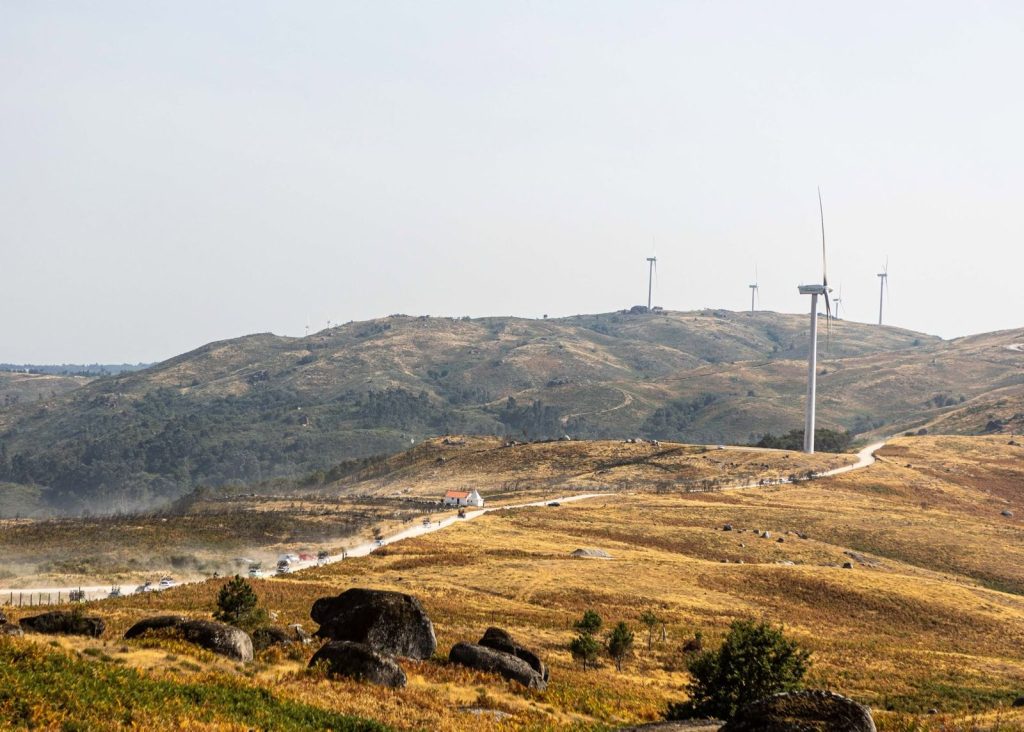
The Setting: Renewed routes, where asphalt gives way, for a moment, to dirt and uncertainty.
The Volta a Portugal never ceased to be a road race, but there was a recent moment when it decided to look back in order to move forward. The introduction of unpaved road sectors brought back a feeling that had disappeared for decades: pure unpredictability.
It was not merely an aesthetic choice. It was a form of cycling closer to its original essence, not because of absolute hardship, but because of uncertainty.
It was in this context that one of the most symbolic moments of that period emerged. The charismatic Rui Sousa, already in the latter stages of his career, found in that terrain one last opportunity to make his mark. He was not the strongest rider in the peloton, nor the fastest. But he was one of those who understood the race best.
His victory, built on experience, positioning, and race intelligence, carried a particular significance: it was not just a result, it was the confirmation of everything a rider represents over the course of a lifetime.
The dirt road did not reward the most explosive rider.
The toughest road is not always the steepest one.
RECENT YEARS: HEAT AS A RIVAL
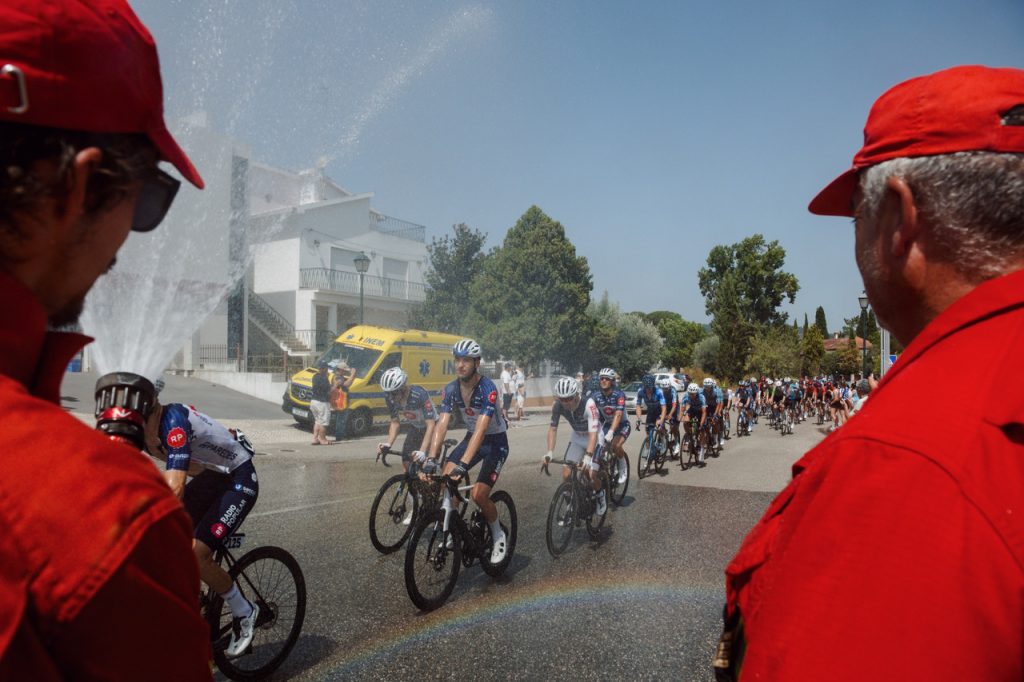
The Setting: Exposed roads, in the height of August, where the heat becomes decisive.
In recent years, the Volta a Portugal has faced an increasingly constant rival: the heat. Stages raced under high temperatures, long stretches without shade, and accumulated fatigue have transformed the race into an event where thermal management has become just as important as physical condition.
Unexpected stories have emerged. Among them is that of Artem Nych, a Russian rider coming from a very different environment, who found in the Volta a terrain to which he adapted remarkably well. In a race dominated by the heat of August, he knew how to manage his effort and integrate himself into a competition that demands more than raw power.
His presence confirms a growing trend: the Volta is becoming increasingly international, but it continues to favour the same type of rider — those capable of enduring when conditions cease to be ideal.
The road knows neither cold nor heat.
The road is still there.
If the Portuguese roads could speak, they would say that they have seen it all. The bicycles have changed, the names have changed, the country and the world have changed, but the essence has never changed.
The Volta remains the same confrontation between man… and the road…
The road never chooses winners.
It only reveals who can survive it.